

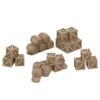
Cargo Props – 3D Printable Scatter Terrain Pack
$8.00
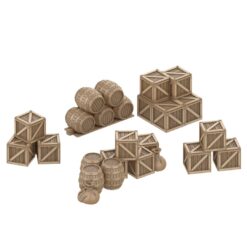
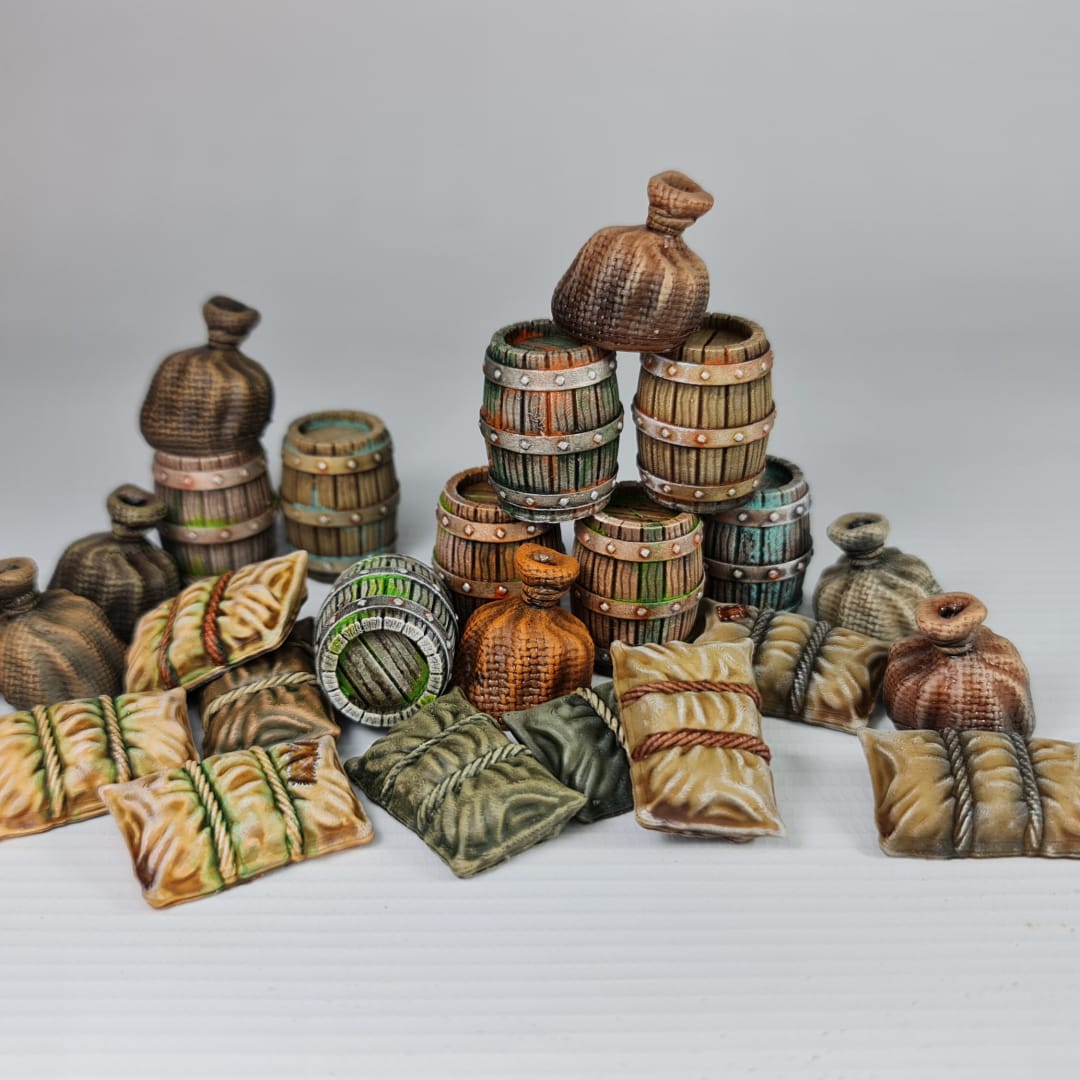
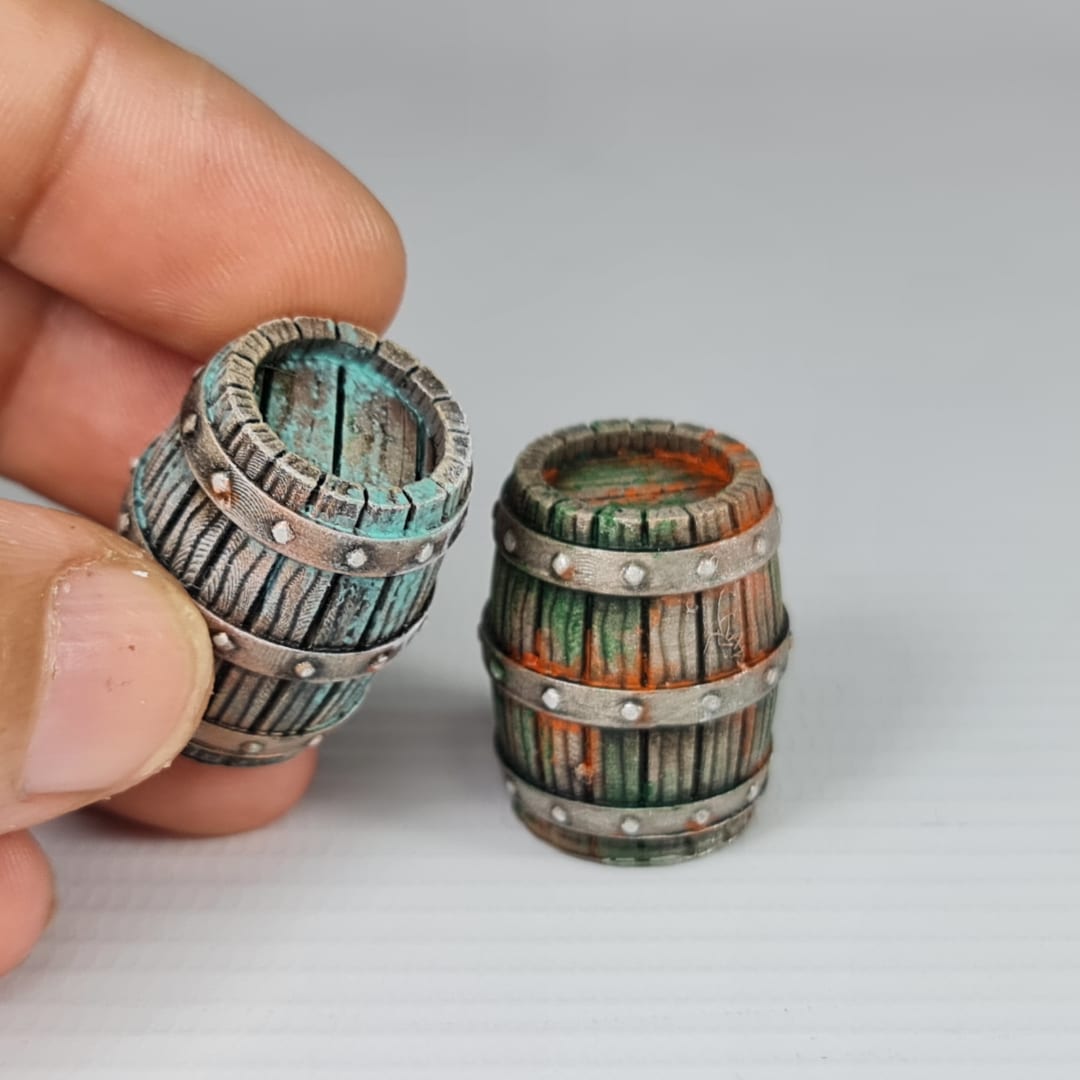
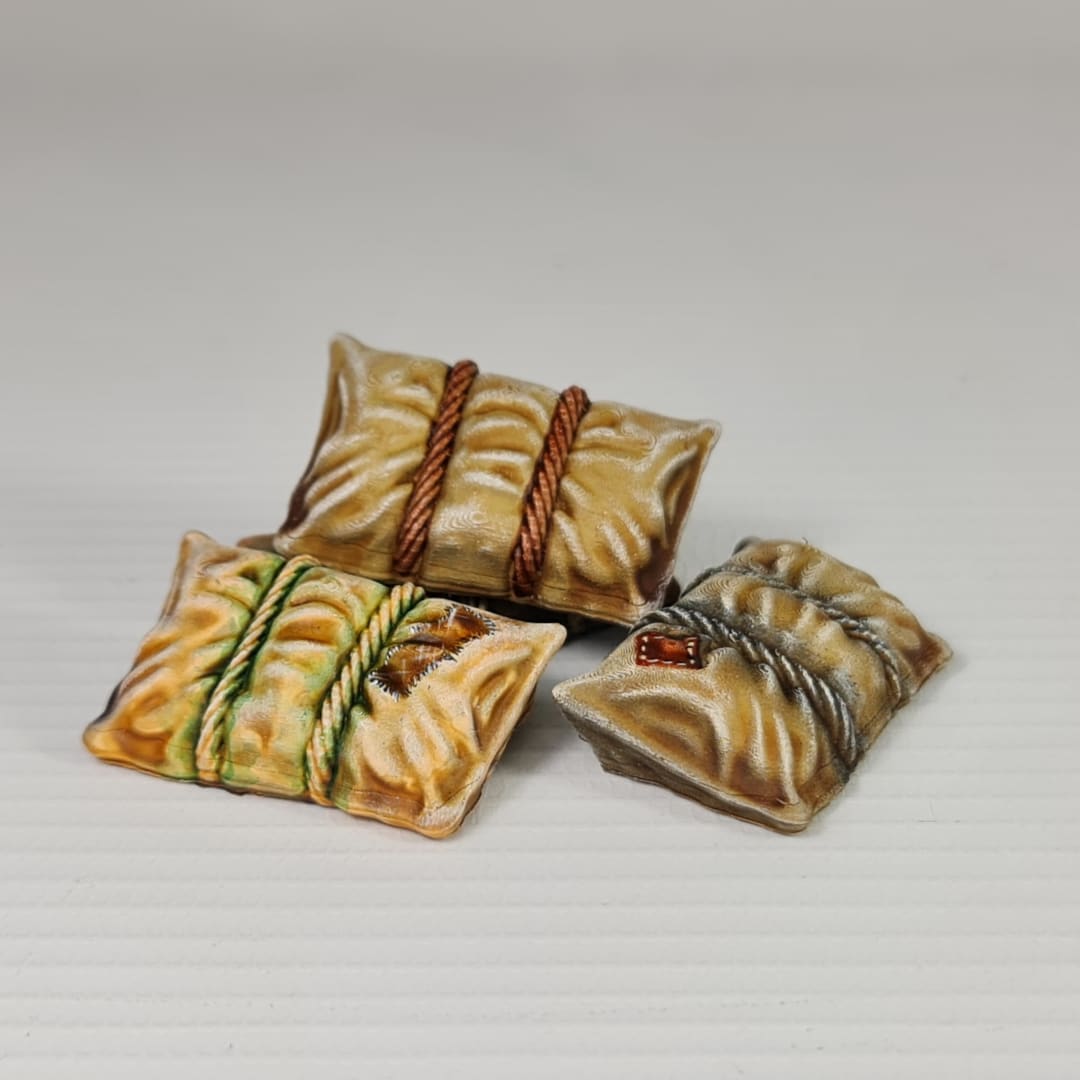
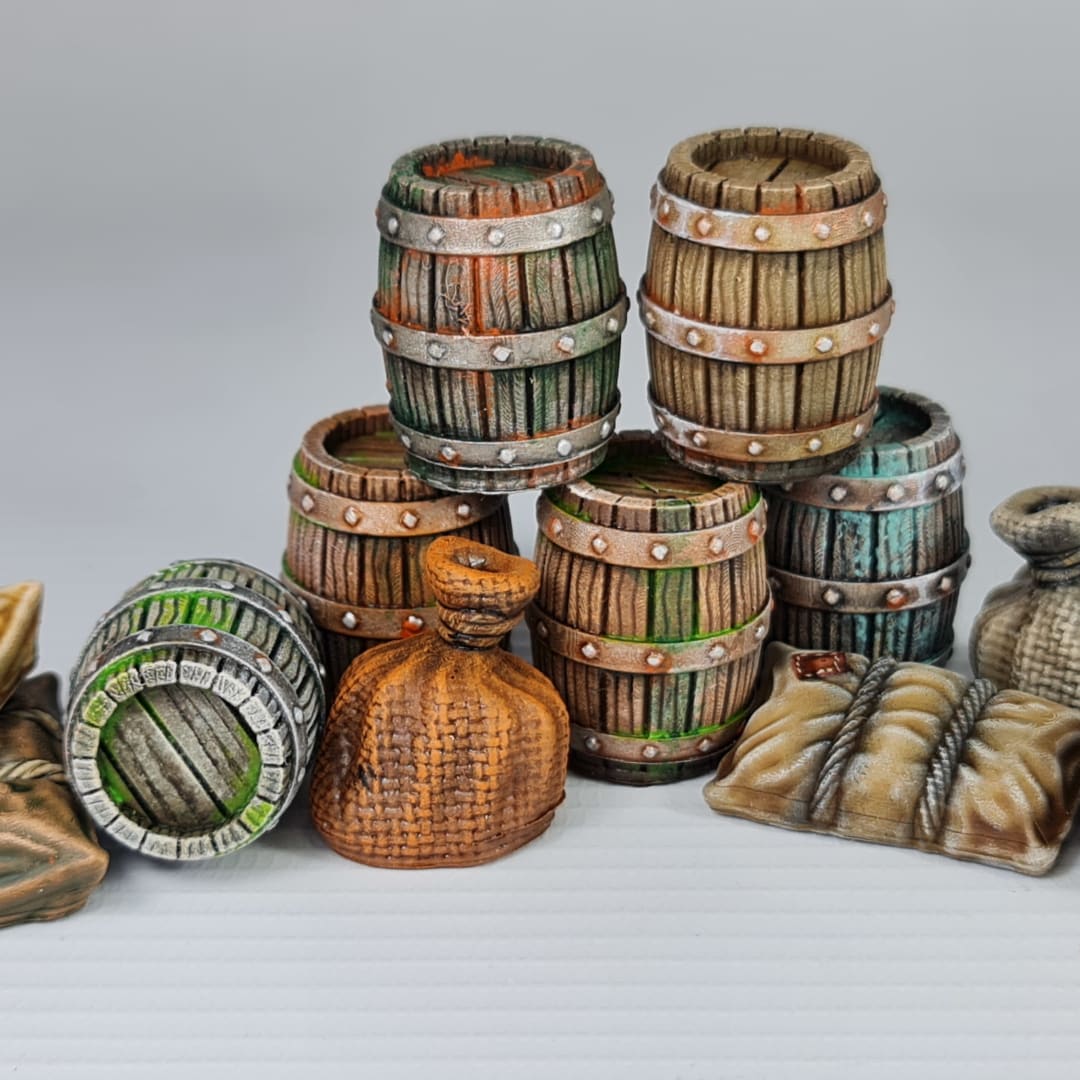
Populate your battlefields and cityscapes with this essential collection of Cargo Props. This versatile set of crates, barrels, and sacks adds instant realism and tactical depth to any gaming table. Perfect for creating bustling marketplaces, cluttered docks, or strategic supply depots, these pieces are the building blocks of immersive worlds. Craft narratives of trade, intrigue, and conflict with these beautifully detailed models.
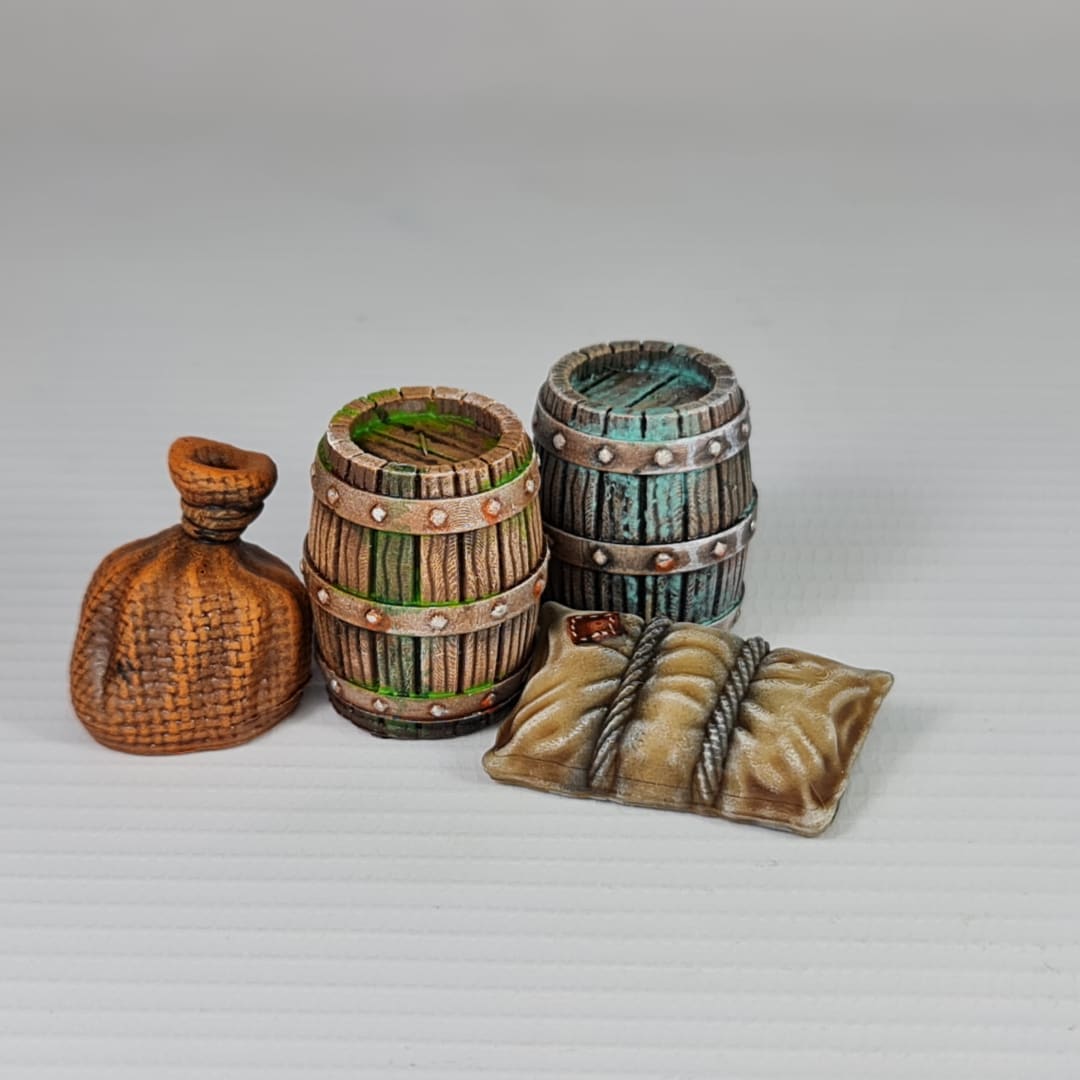
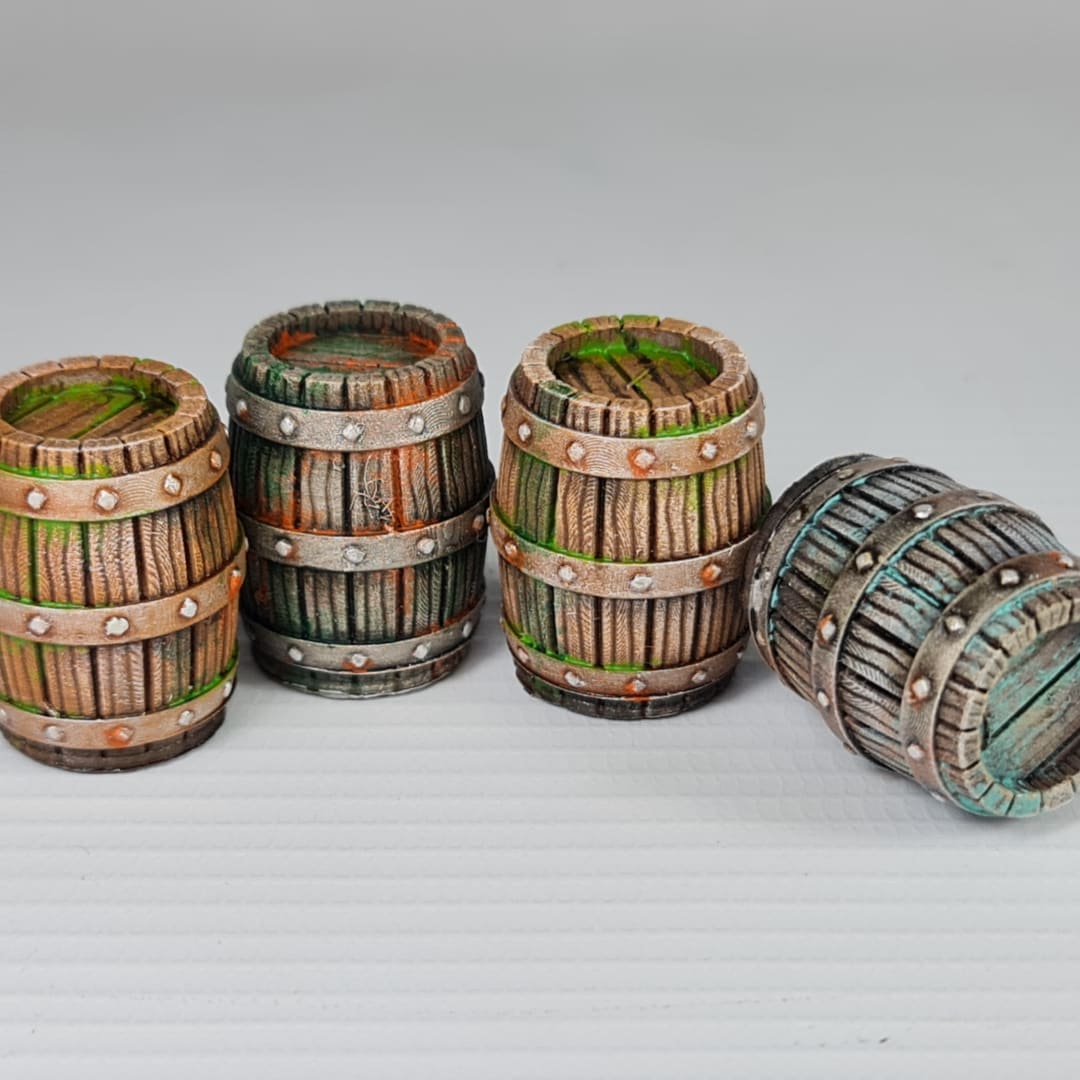
This set of high-quality STL files provides a fantastic assortment of Cargo Props, perfect for adding detail and gameplay elements to your tabletop scenes. Each model, from the sturdy wooden crates and barrels to the rustic sacks and bundles, features crisp, authentic textures like wood grain and cloth weave that come to life once printed. The models are expertly scaled for 28mm and 32mm wargames and RPGs, making them compatible with a vast array of popular systems. Designed for exceptional results on both FDM and Resin 3D printers, these props print beautifully, providing you with durable and detailed scenery. Use them as line-of-sight-blocking cover, objective markers, or simply as immersive scatter to flesh out your docks, warehouses, bandit camps, or medieval town squares.
For millennia, the simple crate and barrel have been the unsung heroes of trade, exploration, and warfare. These humble containers are the very foundation upon which economies were built and empires expanded. The art of cooperage, or barrel-making, is an ancient craft dating back to at least the Iron Age Celts and later perfected by the Romans. Barrels, with their iconic bulging shape, were a marvel of engineering. The curvature allowed a single person to roll and pivot a heavy load with relative ease, while the tension of the metal hoops against the wooden staves created a strong, watertight seal, perfect for transporting liquids like wine, beer, and oil, as well as dry goods like grains and salted fish. They were indispensable aboard the ships that sailed the Mediterranean, the cogs of the Hanseatic League, and the galleons of the Age of Discovery.
Similarly, the wooden crate, while seemingly simpler, represented a crucial step in the standardization of shipping. Its rectangular shape made it far more efficient for stacking in a ship’s hold or a warehouse than the round barrel. Nailed together from rough-sawn planks, crates protected goods from the elements and the rigors of travel. They carried everything from delicate pottery and spices from the Far East to military supplies and ammunition for armies on the march. Sacks, often made of durable burlap or hessian cloth, were the go-to container for loose goods like flour, coffee beans, and potatoes. Their flexibility allowed them to be squeezed into tight spaces, maximizing every inch of precious cargo room. These objects weren’t just containers; they were the lifeblood of civilization, tangible links in the great chain of commerce that connected distant cultures and fueled the engines of history.
Related products