
Fantasy Watchtower – Modular RPG & Wargaming Terrain STL – 3D Printable
$9.00
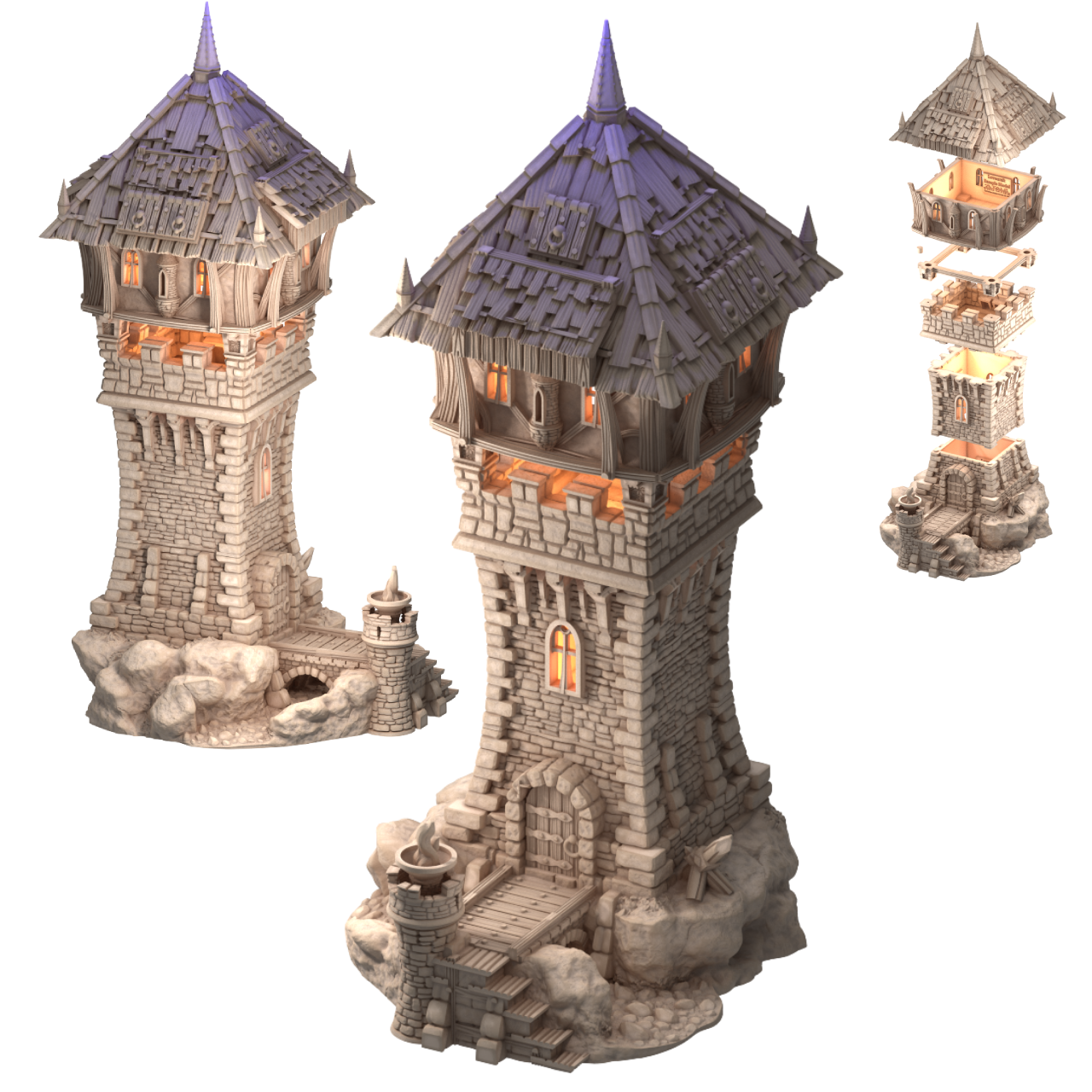
Command the high ground with this magnificent fantasy watchtower. A bastion of defense and a beacon of vigilance, this multi-level tower combines rugged stone masonry with intricate woodwork, creating a stunning centerpiece for any gaming table. Its commanding presence and playable interior will elevate your tabletop adventures to epic new heights, offering a perfect vantage point for archers or a secluded sanctum for a powerful wizard.
The Fantasy Watchtower is a meticulously designed, multi-level structure, perfect for bringing verticality and strategic depth to your tabletop games. This 3D printable STL file is engineered for the 28mm/32mm scale, making it an ideal terrain piece for a vast array of wargames and role-playing adventures. The model is delivered as a set of modular pieces, including a rocky base, several stackable stone and timber floors, and a removable, distinctively tiled roof. This modularity allows for full interior access, transforming the tower from a simple line-of-sight blocker into a dynamic, multi-floored encounter area where heroes can ascend, floor by floor, to confront the final boss.
Optimized for FDM printing, the main components of the tower are designed to be printed entirely without supports, ensuring a clean, straightforward printing experience. The high-resolution textures, from the rough-hewn stone blocks of the foundation to the weathered wooden planks and detailed shingles of the upper levels, will look stunning straight off the print bed. For those seeking the utmost detail, the model is also perfectly suitable for resin printing, which will capture every subtle nuance of the design. Use this tower as a strategic objective, a wizard’s lonely spire, a border garrison, or the headquarters for a city watch.
The design of this watchtower draws inspiration from a long and vital history of defensive structures. From ancient Roman turres and speculae to the medieval European context, watchtowers were the eyes and ears of any fortified settlement or border. They were strategically placed on high ground, along coastlines, or at regular intervals along defensive walls like Hadrian’s Wall or the Great Wall of China. Their primary function was observation—spotting approaching armies, signaling warnings via beacons of fire or smoke, and maintaining control over the surrounding territory.
In medieval Europe, the concept evolved into structures like the German Bergfried, the heavily fortified central keep of a castle that often served as a final refuge but also as a watchtower. Similarly, the Peel towers of the Anglo-Scottish borders and the tower houses of Ireland were fortified private residences for the local gentry, combining living quarters with a strong defensive posture. These were not just military outposts but symbols of power and authority. This fantasy watchtower embodies that dual nature: it is both a formidable military asset and a characterful location brimming with narrative potential, echoing centuries of real-world strategic architecture.
Related products