
This series of regular columns will highlight some of the makers and designers whose hard work can go unappreciated, and I hope, encourage you to venture further into the world of self-printing or perhaps even inspire your own designs. I’ll be talking to the designers and companies who specialise in designing miniatures you can print at home.
I have been 3D printing my own miniatures for a while now. I am a miniature painter first and foremost and not a wargamer (although that does not stop me buying the rule books and reading the lore!). That said, I’m always inspired by the displays and games I see when I visit Salute and other shows. Of course, the miniatures world is full of ready-made figures or plastic kits, boxes of which I have in my wardrobe waiting for me to open, but these are, as I know, costly. Now there is another option: 3D printing your own miniatures.
Printing your own miniatures is growing more and more popular in the world of fantasy and science fiction wargaming and among those of us who collect and paint rather than wargame. It is the variety and the relative cheapness of the model that makes 3D printing such a fast-growing phenomenon. This trend is linked with increasing affordability of entry-level resin printers and the ready availability of resin and the other tools that you need. Every element of my set up came via Amazon. Of course, once you get the entry-level equipment, you will want to improve, and 3D printing can become a hobby in itself.
Although the process of 3D printing can be, to say the least, a faff in the early stages of setting up and running off your first few prints, once you get to know what you need it becomes much more straightforward. When you are set up, printing yourself allows access to a whole other world of miniatures, models, buildings and busts.
Where to Find STL Files
My go-to supplier is Myminifactory.com, which is where designers of miniatures sell their STLs and their website i-lovecraft.com (where you can get nice discounts 😉 ). The STL is the file you need that is in essence the miniature, interpreted by ‘Slicer’ software which then talks to your printer. This may seem complicated in writing, but it’s not in practice once things are set up. Many of these designers offer Kickstarters which you can support at various levels, allowing access to exclusive miniatures. You can also buy the STLs for individual miniatures at reasonable prices.
The First
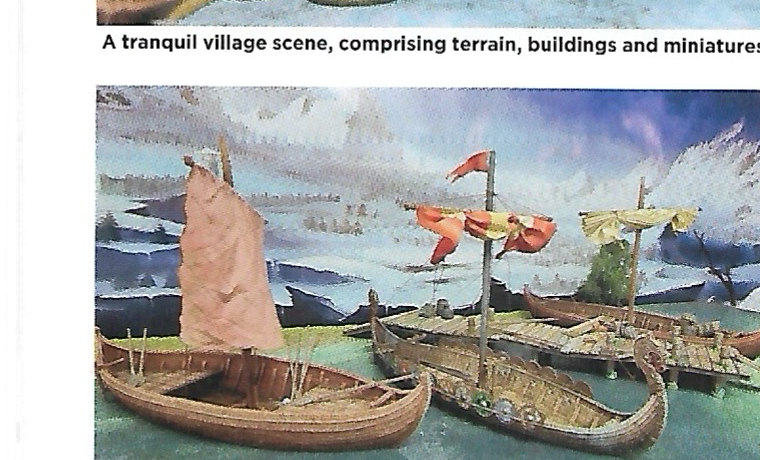
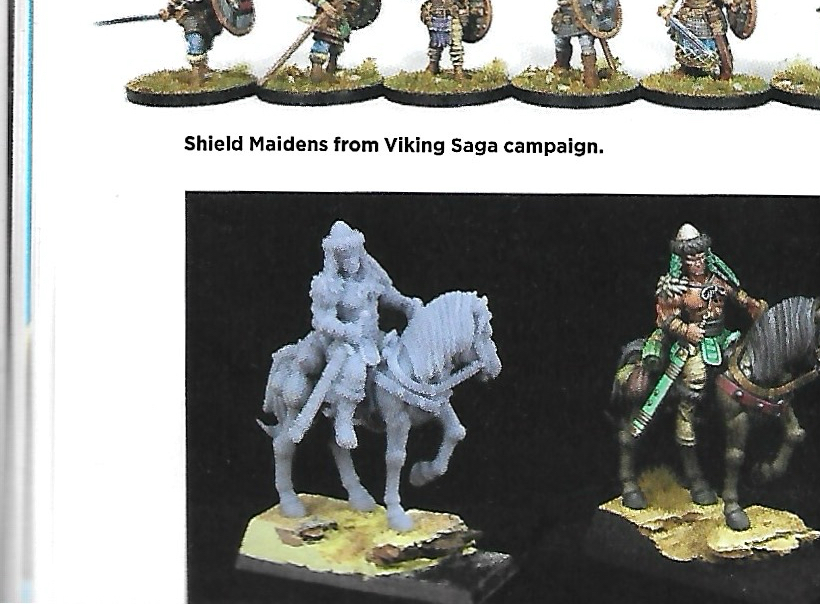
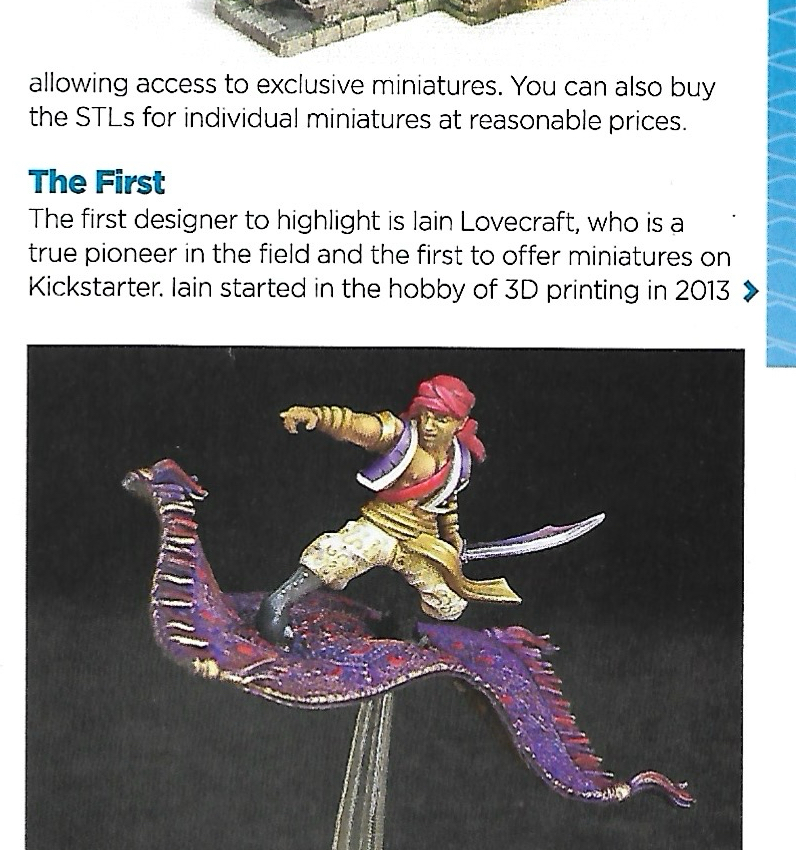
The first designer to highlight is Iain Lovecraft, who is a true pioneer in the field and the first to offer miniatures on Kickstarter. Iain started in the hobby of 3D printing in 2013 and went commercial two years later. His first release was All Roads Lead to Rome. It offered a miniatures pack, a Roman City Pack, an Underworld pack and included as a stretch goal a Roman War Galley.
“Back then there were no easy access resin printers, so all those miniatures had to be printed on FDM machines.” — Iain Lovecraft
Kickstarter reveals that 215 people backed this initial project with a total of £19,289. The level of design skill is easy to see in these models and the individual models do have their own character. This was just the start — over the last eight years Iain has launched twenty projects on Kickstarter.
The Variety of Iain’s Work
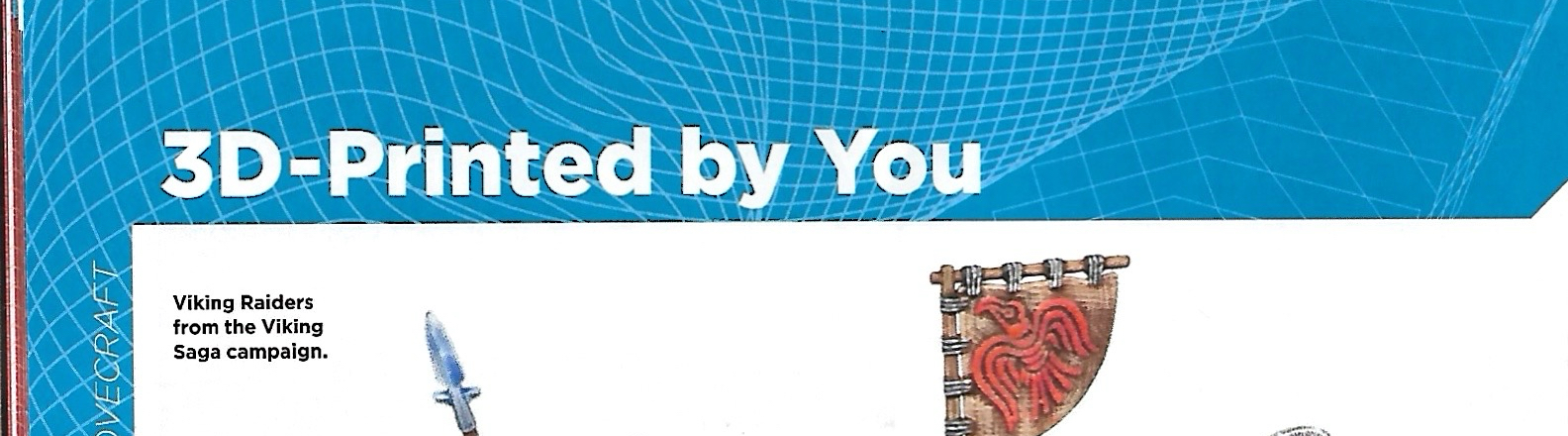
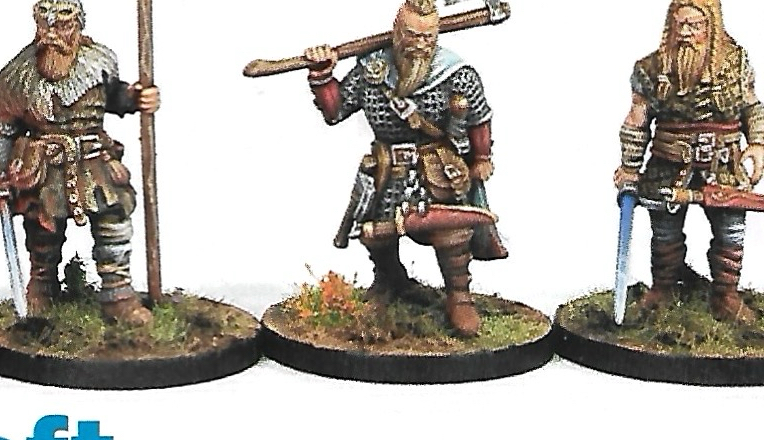
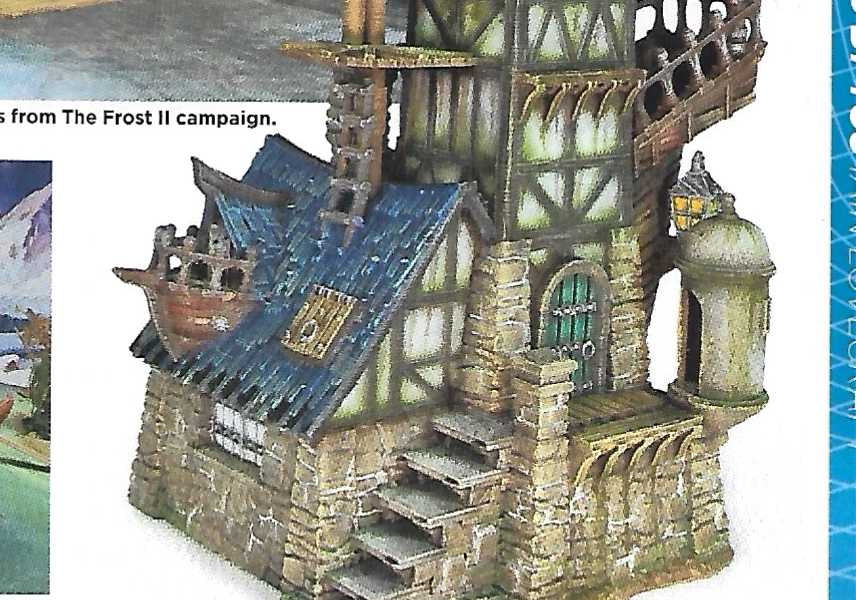
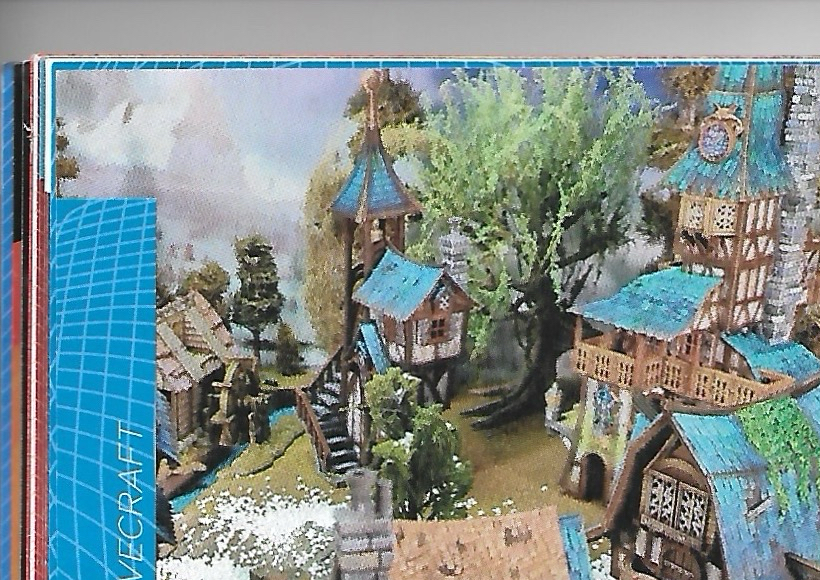
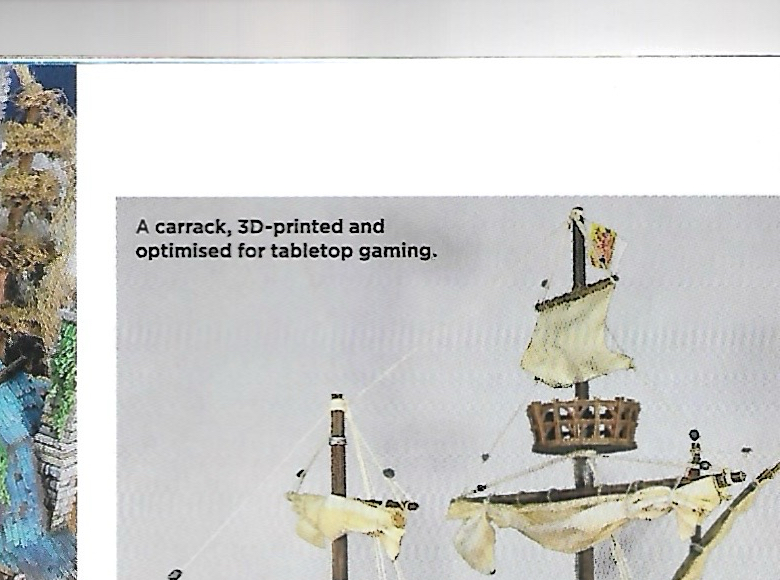
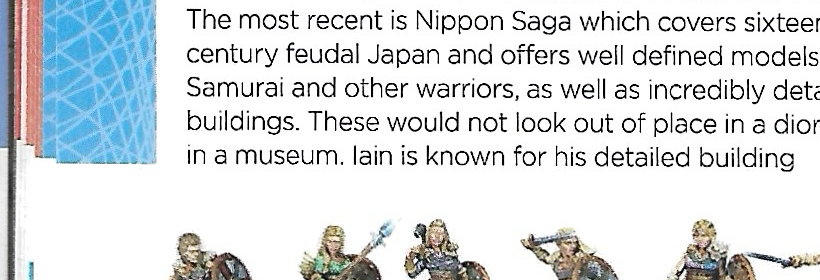
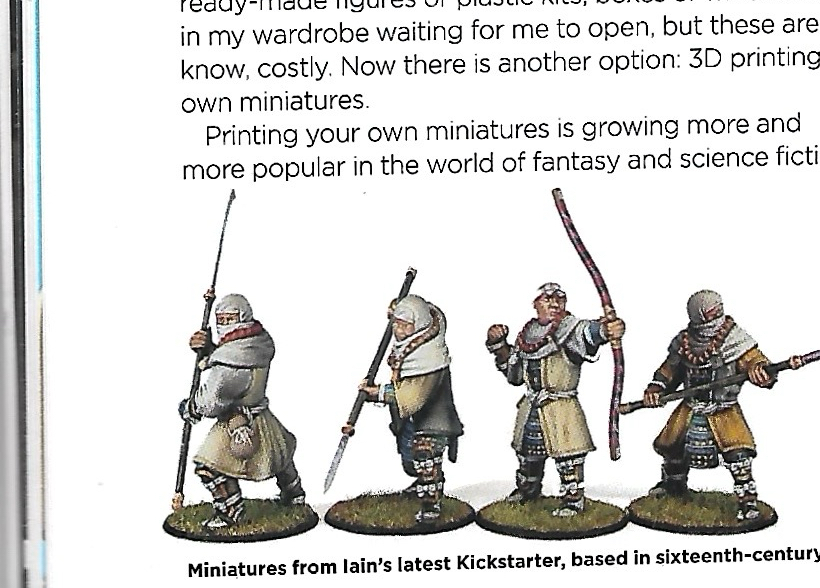
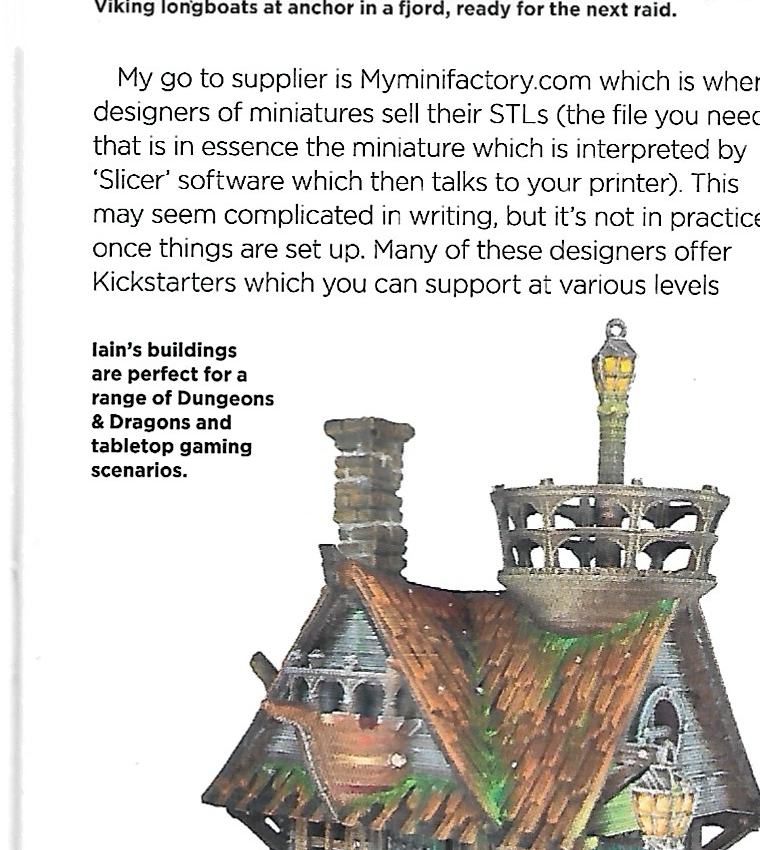
The projects on Kickstarter reveal the variety of Iain’s work, from Dragons & Gladiators to Pirates and Vikings. The most recent is Nippon Saga, which covers sixteenth-century feudal Japan and offers well-defined models of Samurai and other warriors, as well as incredibly detailed buildings. These would not look out of place in a diorama in a museum. Iain is known for his detailed building design, and it is no surprise that his work has been picked up by companies such as Sally4th, who create metal reproductions of his work.
Iain’s background includes working in the film industry creating props and scenery, and this can clearly be seen when you look at the detail of his figures and buildings.
Scaling & High-Resolution Design
Much of Iain’s work can be upscaled from popular gaming scales — 28mm or 32mm — to 54mm or even 75mm. This is because work goes into the design process from the very beginning.
“We now work with 12K+ resolution miniatures which have a much higher DPI (Details Per Inch). This means that our clients can upscale the minis to say, 75mm scale and get a detailed model printed out at that size.” — Iain Lovecraft
This care in design and passion for his craft explains why Disney and Mattel are some of the merchants that have licensed Iain’s designs and produced physical versions of them.
Iain aims to launch two projects a year on Kickstarter and offers a service so that new backers can collect his past work, so do look out for these. His work was and still is at the forefront of 3D-printing design.
Be Inspired
Explore Iain’s full catalogue of 3D-printable miniatures, terrain, and buildings at his official website:
www.i-lovecraft.com