Barbary Pirates Miniatures – 3D Printable STL Files for Wargames & RPGs
Original price was: $22.00.$15.00Current price is: $15.00.
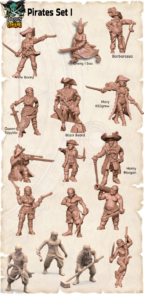
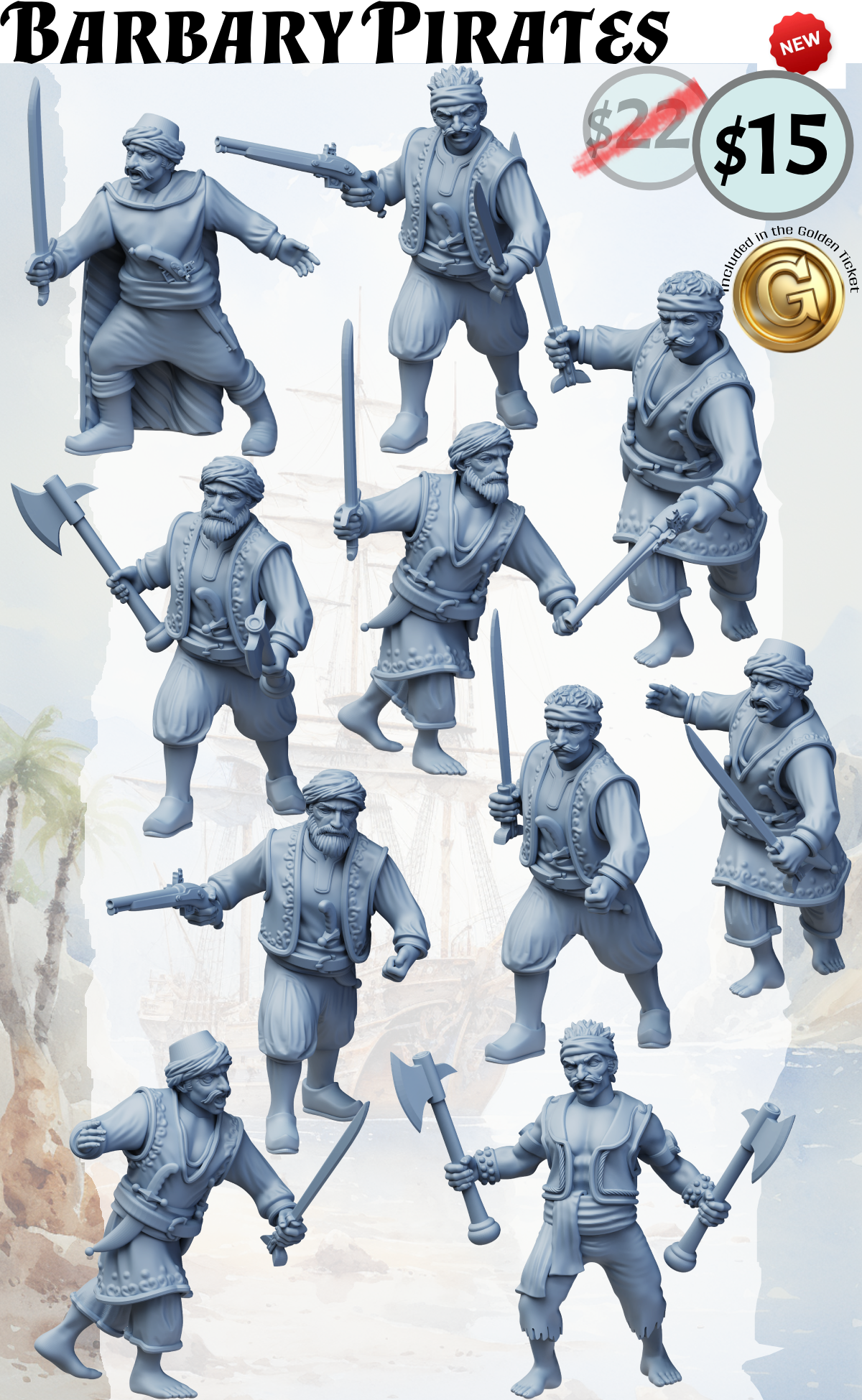
Unleash the might of the Barbary Corsairs on your tabletop! This collection of ten highly detailed miniatures captures the daring spirit of the Mediterranean’s most feared seafarers. Perfect for historical wargames, naval adventures, or as unique characters in your RPG campaigns.
Each warrior is dynamically posed, armed with scimitars, pistols, and axes, ready for battle. Bring your maritime sagas to life with these exceptional models, crafted with passion and historical accuracy for the discerning hobbyist.
This digital product contains the STL files for ten unique Barbary Pirate miniatures, meticulously sculpted for 3D printing. Designed at the popular 28mm/32mm heroic scale, they are perfectly suited for a vast array of historical tabletop wargames, naval combat systems, and role-playing games. These STL files are optimized for resin 3D printers to capture every intricate detail, from the embroidered textures on their vests to the ornate handles of their daggers. While designed for resin, they can also be printed on finely tuned FDM printers.
Bring a formidable and historically rich force to your gaming table. Field them as a complete warband in a skirmish game, use them as the elite crew for your prize vessel, or introduce them individually as compelling antagonists or allies in a bustling port city. Their varied armament and dynamic poses offer immense tactical and narrative possibilities, making them a versatile addition to any collection.
The Scourge of the Mediterranean: The Barbary Corsairs
The Barbary Pirates, more accurately known as Corsairs, were not simply random marauders but a powerful and organized force that dominated the Mediterranean Sea for over three centuries, from the 16th to the early 19th century. Operating from the semi-autonomous North African city-states of Algiers, Tunis, Tripoli, and Salé—collectively known as the Barbary Coast—these seafarers were a complex mix of privateers, naval warriors, and merchants, operating under the nominal authority of the Ottoman Sultan.
Their rise was intrinsically linked to the great geopolitical struggle between the Ottoman Empire and the Christian powers of Europe, particularly Spain and the Italian city-states. Figures like the legendary Barbarossa brothers, Oruç and Hayreddin, transformed piracy into a state-sponsored enterprise, establishing regencies in North Africa that became formidable naval bases. The Corsairs saw their actions as part of a holy war, a continuation of the conflict against Christian expansion. They sailed in swift galleys and xebecs, vessels perfectly designed for the coastal raiding and hit-and-run tactics that made them infamous.
Their primary objective was capturing valuable ships and cargo from European nations. However, their most profitable enterprise was the capture of people. European sailors and coastal villagers were taken captive and either sold into slavery or held for exorbitant ransoms, creating a lucrative economy that funded the Barbary states for generations. Their raids were audacious, reaching as far as the British Isles, Ireland, and even Iceland, striking fear across the whole of Christian Europe. Life as a Barbary Corsair was a multicultural affair. While many were native North Africans (Berbers and Arabs), a significant number were European converts to Islam, known as ‘renegades,’ who brought with them invaluable knowledge of European shipbuilding, navigation, and military tactics. This diverse melting pot of cultures is reflected in their appearance, blending Ottoman, Arab, and European styles of dress and armament, just as these miniatures portray.