Kabuto-Minka (兜民家)
$10.00
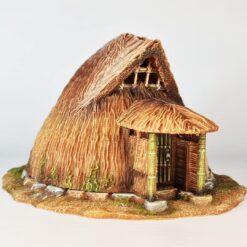
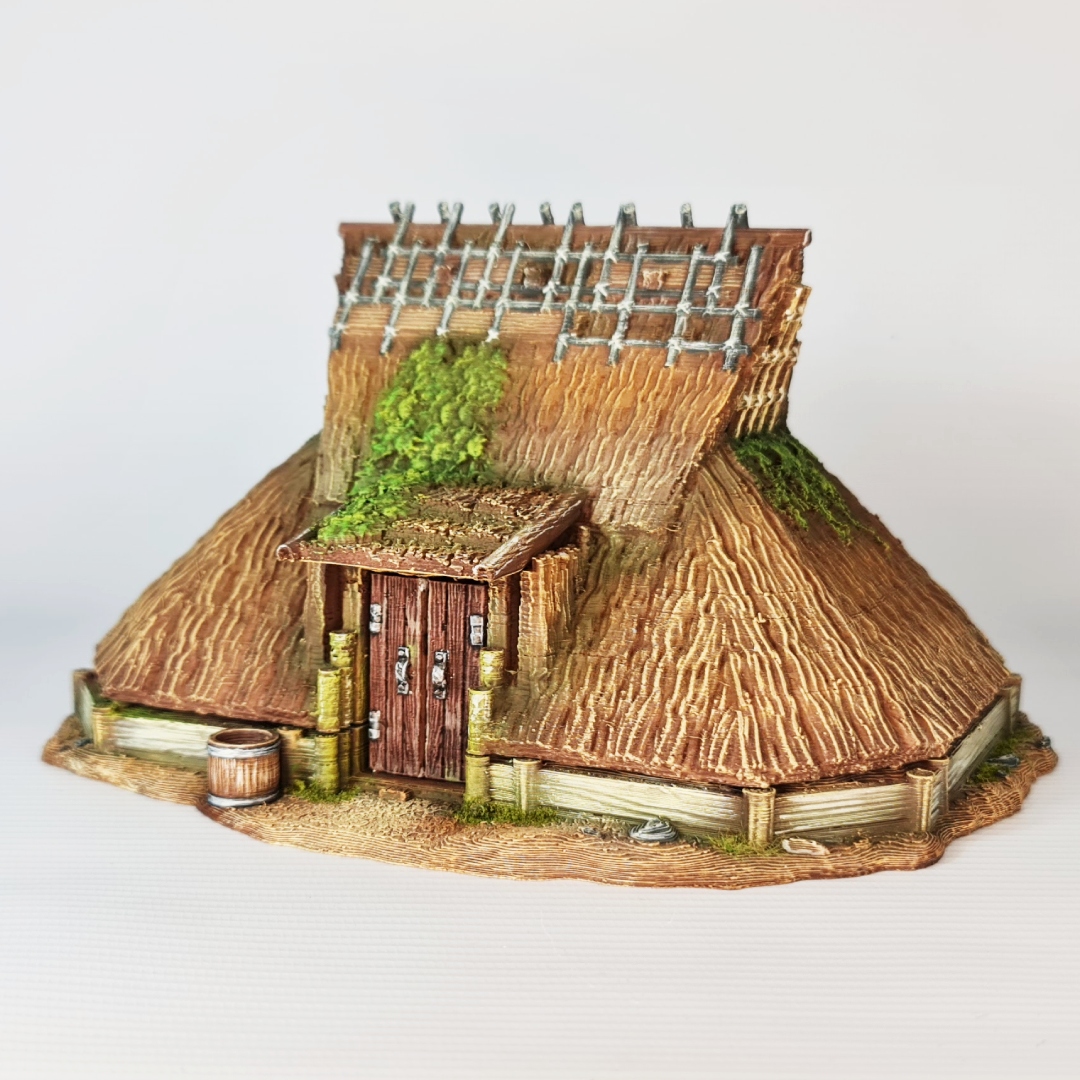
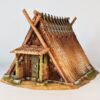
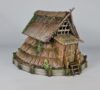
Embodying the defensive elegance of the samurai era, this Kabuto-Minka is a striking 28mm scale tribute to the “helmet-style” architecture of feudal Japan. The model features an expansive, low-slung thatched roof that mimics the protective silhouette of a warrior’s helm, a design historically used to shelter silkworms in mountain villages. Optimized for FDM printing, the sculpt highlights the intricate play between heavy textures and protective geometry, bringing a unique, noble presence to your historical tabletop landscape.
The Warrior’s Shelter: The 28mm Kabuto-Minka Helmet-Style Manor
In the rugged landscapes of feudal Japan, where the line between the farmer and the warrior often blurred, architecture was more than just shelter—it was a statement of identity and function. The Kabuto-Minka, or “Samurai Helmet” farmhouse, is a breathtaking representation of this cultural intersection. Designed with meticulous historical rigor for the 28mm scale, this model brings a grand, imposing silhouette to your tabletop, capturing the noble spirit of the Japanese countryside.
An Architectural Homage to the Samurai
The defining characteristic of this model is its dramatic Kabuto-zukuri (helmet-style) roof. Named for its striking resemblance to the Kabuto worn by samurai on the battlefield, this steep, sweeping thatched roof was a hallmark of the mountainous regions in the Edo period.
But the beauty of the Kabuto-Minka lies in its hidden history. This massive roof wasn’t just for show; it was a functional marvel designed for the sericulture (silk farming) industry. The “gills” or tiers in the thatch allowed smoke from the indoor hearth (Irori) to rise and ventilate the attic spaces where precious silkworms were raised. Our model captures this specialized architecture with precision—from the heavy, layered textures of the straw to the sturdy timber framework that supports its immense weight.
The Zenith of FDM Engineering: Support-Free Excellence
Printing high-detail, historically accurate terrain often comes with the frustration of complex support removal. We have eliminated this hurdle through innovative geometric design. The Kabuto-Minka is engineered to be 100% support-free for FDM printing, first engineered and invented by Iain Lovecraft.
By aligning every overhang and curve to the internal logic of 3D printing, we have ensured that your machine can bridge every gap without a single gram of wasted material.
-
Flawless Detail Preservation: Without supports to clip away, the intricate textures of the thatch and the delicate wood grain of the door frames remain untouched and sharp.
-
Rapid Deployment: Go from the build plate to the painting table in minutes. The absence of post-processing makes this the ideal choice for builders looking to populate a village quickly.
-
Filament Efficiency: Print a large-scale, impressive manor house while minimizing waste, making it both an economical and environmentally conscious choice for your hobby desk.
The geometry is so well-tuned that the very layers of the print enhance the horizontal binding of the thatch, creating a naturalistic look that requires minimal cleanup.
Redefining Your Tabletop Scenery
In the world of 28mm gaming, the scale of your terrain dictates the scale of your story. The Kabuto-Minka acts as a “Hero Building”—a piece of terrain that is not just background noise, but a central character in your game.
A Bastion for Your Samurai Skirmishes
This isn’t your average peasant hut. The Kabuto-Minka suggests a level of wealth and regional importance. In games like Test of Honour or Bushido, it serves as the perfect residence for a local village headman or a retired samurai.
-
The Defensive Perimeter: The low-hanging eaves and the surrounding wooden palisade create a natural fortress. Players must strategize around the “dead zones” created by the massive roof, using the shadows for stealth or the sturdy walls as a bulwark against incoming arrows.
-
Cinematic Chokepoints: The detailed double doors and the raised wooden steps provide clear, tactical points of entry. A battle on the porch of a Kabuto-Minka feels like a scene pulled straight from a Kurosawa film.
Narrative Depth for Roleplaying Games
For Game Masters, this model offers rich descriptive opportunities. It is the perfect setting for a “Silk Road” mystery or a political intrigue plot.
-
The Hidden Industry: Use the unique historical context of the silkworm tiers to create quests—perhaps a secret scroll is hidden in the rafters, or the smoke from the hearth is used to send signals across the valley.
-
Atmospheric Presence: The “Wabi-Sabi” aesthetic—finding beauty in the weathered and the aged—is baked into the sculpt. The moss-covered thatch and the heavy timber supports tell a story of a family that has held this land for generations.
Masterful Craftsmanship in Miniature
We have maximized every millimeter of the 28mm scale to ensure that the cultural details are as accurate as they are beautiful:
-
Hyper-Textured Thatch: The roof is a dry-brusher’s dream. The deep grooves allow for dark washes to sink in, while the tips of the straw catch highlights, creating a realistic, organic look.
-
Timber and Stone: The model showcases the traditional Ishiba-tate method, where heavy wooden pillars sit directly on top of foundation stones to prevent rot. These details add a level of groundedness that elevates the entire gaming table.
-
Traditional Accessories: The inclusion of external barrels and traditional water buckets adds “life” to the model, suggesting a busy, working farmhouse rather than a sterile museum piece.
A Canvas for the Hobbyist
While the historical precision is fixed, the artistic potential is limitless. The large surface area of the “helmet” roof allows painters to experiment with different shades of weathered straw—from golden yellows to deep, damp browns.
-
Pro-Tip: Focus on the “valleys” of the roof where moss might grow, using green flock or glazes to simulate the damp climate of the Japanese highlands.
-
Versatility: Though designed for feudal Japan, the rugged, “earth-shack” aesthetic of the Kabuto-Minka makes it a fantastic fit for fantasy settings, Norse-inspired villages, or even a unique dwelling in a grimdark forest.
Conclusion: The Crown Jewel of Your Village
The Kabuto-Minka is more than just a piece of scenery; it is an architectural landmark. It bridges the gap between the humble peasant life and the high-status world of the samurai, offering a unique silhouette that will immediately become the focal point of your table.
Engineered for the modern maker and inspired by the ancient masters, this support-free model is the ultimate addition to any 28mm collection. Bring the dignity and the history of the “Samurai Helmet” house to your next game, and let your battles unfold in the shadow of tradition.
Related products